Guide
How to Dress Braless for Summer Without Heavy Layers
A practical summer guide to reducing bulk, heat, and outfit stress by matching the fix to the actual problem instead of adding extra layers by default.
Amazon picks
Fast picks for this page
These are the products this page refers to most directly. Use the notes below to match the listing to your outfit, skin tolerance, and wear time.
True & Co.
True & Co. True Body Lift V Neck Bra
Soft wireless bralette used as a smoother everyday layer.
Best for: Smooth everyday layering when comfort matters more than hard structure.
Check before buying: Not the lowest-profile choice for very fitted white tees or low-back outfits.
$35-60
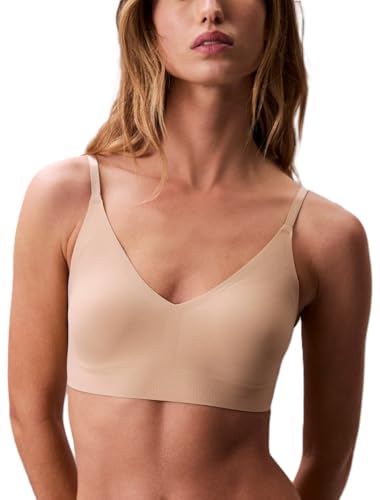
Calvin Klein
Calvin Klein Invisibles Comfort Bralette
A smooth, barely-there wireless option for small-bust and low-support everyday outfits.
Best for: Small-bust readers who want light coverage, minimal seams, and a less structured feel.
Check before buying: Light support only; not the right answer if you need lift or firm hold.
$25-45
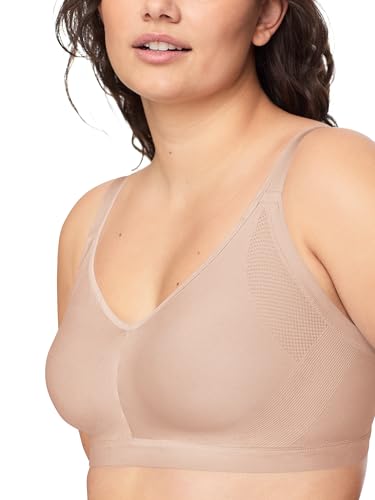
Warner's
Warner's Easy Does It Wireless Bra
A soft wireless bra for readers who want more everyday coverage than a bralette without returning to hard structure.
Best for: Everyday comfort when you want a real bra shape but still care most about softness.
Check before buying: Check strap and band visibility under open necklines.
$20-35
Quick answer
- Best for: warm-weather readers who want lighter outfits that still feel secure enough in daylight, transit, and long wear
- Focus: getting through summer outfits without piling on extra layers that trap heat, show through, or make simple clothes feel harder to wear
- Decision rule: in summer, solve only the problem the outfit actually has — cling, sheerness, or support — and avoid adding a full extra layer unless the garment truly needs it
Summer outfits fail for different reasons than cold-weather outfits do. Heat makes fabric clingier, daylight makes contrast more obvious, and long wear turns “small compromises” into things you keep noticing all day.
That is why the usual instinct — add another layer for safety — often makes the outfit worse. The better summer question is: what exactly is going wrong here?
Is the top sheer? Is it clinging? Is it just a hard garment that never feels easy once the weather gets hot?
Start with the type of summer problem
| Summer outfit problem | Common example | Best first move | What often backfires |
|---|---|---|---|
| Cling in a fitted tee or tank | cotton baby tee, rib tank, modal shell | low-profile matte fix | a thicker inner layer that prints through |
| Broad sheerness in a loose top | gauzy shirt, airy knit, open-weave blouse | breathable smooth layer | tiny covers that solve only one spot |
| Heat and friction over long wear | commute outfit, travel day, all-day errands | simpler fabric and lower bulk | support-heavy setups that feel sticky later |
| Visibility plus poor garment fit | narrow armholes, warped neckline, over-stretched knit | replace the garment | stacking products under a bad top |
Summer punishes unnecessary complexity
A setup that feels acceptable for ten minutes indoors can become annoying once you start walking, sitting outside, or moving between sun and air conditioning.
The usual summer trouble spots are:
- too much fabric trapping heat
- shiny materials looking louder in direct light
- sweat making a clingy top reveal more
- outfit solutions that work only when you are perfectly dry and standing still
This is why lower-maintenance usually beats theoretical perfection in hot weather.
When a small fix is enough
A smaller fix usually works best when the top is already close to wearable and you only want to reduce one visible issue.
That tends to be true when:
- the top is fitted rather than loose
- the fabric is not broadly transparent
- the problem is front contrast or visible edges
- adding another layer would make the outfit hotter and bulkier than the original issue justifies
This is where a page like How to Handle Show-Through in Thin Knit Tops becomes especially useful: fitted summer tops often need diagnosis more than more fabric.
When a breathable layer is still the smarter route
A true light layer still makes sense in summer when the garment is generally sheer rather than only visually sharp at one point.
That is most common when:
- the blouse floats away from the body
- daylight shows the entire outline underneath
- the outfit is for work or longer wear
- a breathable inner layer will still sit cleanly under the top
In those cases, a simple smooth layer can be less stressful than trying to engineer a tiny fix into a garment that was never built for it.
Better summer outfit formulas
Fitted tee or tank + low-profile fix
Best when the top itself is basically fine and you only want less visible distraction.
Relaxed blouse + breathable underlayer
Best for work, commuting, or full-day wear where calmness matters more than the most minimal possible setup.
Better garment, less intervention
Often the strongest answer. A slightly denser tank, a less clingy knit, or a better-cut summer shell can remove the problem before you start shopping for solutions.
What usually backfires in heat
Common summer mistakes include:
- treating every thin top like it needs the same answer
- adding a second full layer under a very fitted tee
- choosing glossy materials that look louder in sun
- assuming white-on-white automatically disappears
- keeping tops that only work in flattering indoor light
If the outfit already feels mentally noisy while you are getting dressed, heat usually makes that worse.
A practical five-minute summer test
Before trusting the outfit, check it in realistic conditions:
- stand near a bright window or outside
- walk around for a few minutes
- raise one arm and turn sideways
- wait until body warmth changes how the fabric sits
- imagine whether you would still choose the outfit for a hot commute home
The goal is not to make the outfit invisible. The goal is to make it easy enough that you stop thinking about it.
Decision rule
- Fitted top, mostly opacity problem at one point: start with the smallest low-profile fix.
- Loose top, broadly sheer overall: use a breathable smooth layer.
- Outfit needs multiple tricks just to feel normal: change the garment.
Bottom line
Summer braless dressing gets easier when you stop solving every outfit with more fabric. Match the solution to the real problem — cling, sheerness, or support — and avoid adding a full extra layer unless the garment truly needs it. This is most useful for warm-weather readers who want lighter outfits that still feel secure enough in daylight, transit, and long wear.
Read next
FAQ
Quick answers
Is going braless easier or harder in summer?
It can be easier when the outfit already suits heat, but summer also exposes weak fabrics faster because sweat, daylight, and movement make cling and visibility more obvious.
Do you always need a layer under summer tops?
No. Many fitted summer tops work better with a smaller low-profile fix, while looser and more transparent garments sometimes need a true breathable layer.
What makes a summer outfit feel low-maintenance?
A good summer outfit stays comfortable after you get warm, does not need constant checking, and solves only the actual visibility problem instead of adding unnecessary structure.
Keep exploring
Choose the next useful page
Use the library like a decision tool: start with a guide, compare the realistic options, then read the shopping note only if you are close to buying.
Related
Read these next
Guide
How to Handle Show-Through in Thin Knit Tops
A practical guide to deciding whether a thin knit top needs nipple covers, a soft layer, or a different top altogether.
Compare
Boob Tape vs Soft Bralette
A practical comparison of boob tape and soft bralettes for readers deciding between shaping control and easier all-day wear.
Shop Note
How to Choose a Soft Bralette for No-Show Comfort
A practical shopping guide to finding a comfort-first bralette that behaves well under everyday tops without adding bulky lines or unnecessary structure.
Disclosure
This site may include affiliate links. If you buy through those links, we may earn a small commission at no extra cost to you.
This content is for general style and product-education purposes only. It is not medical advice.